

What is Happening in Turkey? The Details


Summary of Recent Developments
On March 20, 2025, Istanbul Metropolitan Municipality Mayor Ekrem İmamoğlu was arrested on charges of 'misusing his office' and 'disparaging state institutions,' and was removed from his position by the Ministry of the Interior on the same day. This development triggered widespread protests across Turkey, with political parties, civil society organizations, and citizens responding intensely.
Chronology of Events
Ekrem İmamoğlu won the Istanbul Metropolitan Municipality mayoralty after elections held in 2019, which were repeated twice. His initial victory was annulled by the Supreme Electoral Council, and in the re-run on June 23, 2019, his margin of victory increased.
In late 2024, a probe was opened against him following various social media posts and statements made to public institutions, resulting in charges of 'disparaging the state.' On March 20, 2025, after the arrest decision was announced, he was sent to prison and removed from office on the same day.
Before his arrest, İmamoğlu posted on social media stating, 'No matter what happens, the will of the people will prevail.' In a letter written from prison, he said, 'This is not an end, but a new beginning. This case is not just mine, it is our case.'

Social and Political Reactions
Following the announcement of the decision, protests erupted in many cities, especially in Istanbul. Clashes between police and demonstrators occurred in some cities. Within seven days, 413 people were detained. Most of those detained were released, while 38 individuals were charged with 'participating in an unauthorized protest.'

One of the symbols of the street protests was a demonstrator in Taksim Square dressed in a Pikachu costume who marched towards police barriers. This image went viral on social media.
Opposition figures from CHP, İYİ Parti, DEM Parti, and other parties described the process as 'illegal and undemocratic.' The leader of İYİ Parti stated, 'This is not just about İmamoğlu, it is an assault on the will of the nation.
'The ruling side adopted a different stance. President Erdoğan stated, 'It is everyone's duty to respect the decision of the judiciary. Whatever the crime, appropriate measures will be taken,' while MHP leader Devlet Bahçeli remarked, 'The time has come to settle accounts with those who betray the state and the nation.'
Solidarity Vote: A Message from the Ballot Box
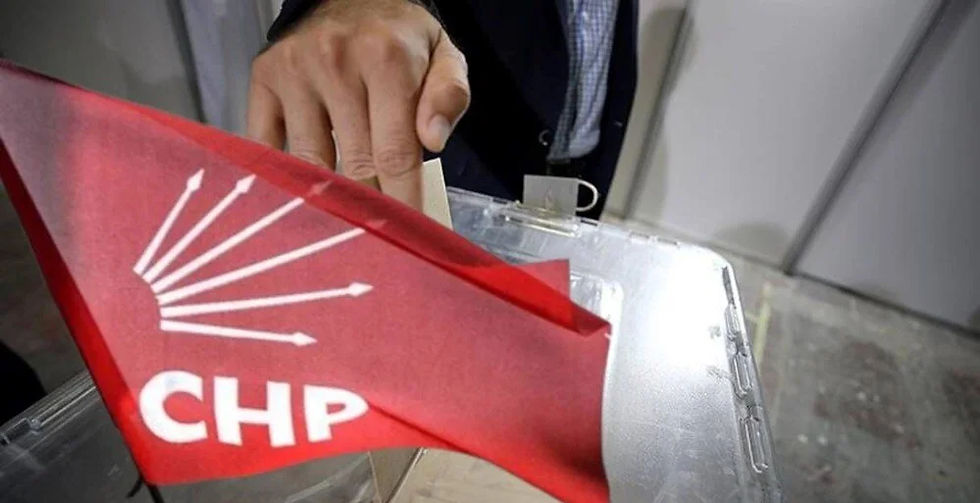
Four days after İmamoğlu's arrest, on March 24, 2025, the CHP organized a symbolic vote called the 'Solidarity Vote.' Although this vote was not legally binding, Istanbul residents cast their votes at voluntary ballot stations. The turnout exceeded 2.5 million, with 96% of the votes supporting İmamoğlu.
This vote was interpreted as a strong message that the will of the people remains powerful.

Boycotted Brands: Official List Announced by CHP
Following the arrest decision, calls for a boycott of various brands emerged on social media. On March 25, 2025, the main opposition party, CHP, published an official boycott list targeting companies and institutions that either supported the government or remained silent.
The brands recommended for boycott by CHP are as follows:
- Espressolab
- D&R - İdefix
- CNN Türk- TRT- TGRT- İhlas Ev Aletleri
- İhlas Haber Ajansı (İHA)
- Turkuaz Yayınevi
- Demirören Haber Ajansı (DHA)
- Türk Petrol
- Milli Piyango
- ETS Tur

Parallels with the Gezi Protests
The events are frequently compared to the 2013 Gezi Park protests, a popular movement in Turkey's history. Back then, resistance against the felling of a few trees quickly evolved into a major call for democracy and freedom. Today, for many citizens, the issue is not solely about Ekrem İmamoğlu; it encompasses core values such as justice, freedom of expression, judicial independence, and the will of the people.
In line with this comparison, the phrase 'This is not about İmamoğlu' is frequently repeated on social media and in the streets.

Implications for Democracy and the Rule of Law
İmamoğlu's arrest and removal from office have raised questions regarding judicial independence, democratic representation, and freedom of expression both nationally and internationally. The European Council, members of the European Parliament, and various international human rights organizations have expressed concerns about these developments.
The extent to which Turkey’s current political structure adheres to democratic principles is being re-examined in light of these events. Observers note that the ramifications of these actions are likely to affect not only the opposition but the entire system in the long run.

International Reactions: Messages from Europe
Following İmamoğlu's arrest, various leaders and institutions in Europe issued statements. The European Union and several European leaders emphasized Turkey's democratic values and expressed their concerns.
- The German Foreign Ministry stated, 'The judicial process of an elected mayor should be transparent and in accordance with democratic principles. Serious concerns have arisen regarding the rule of law in Turkey.'
- French President Emmanuel Macron tweeted, 'Respecting the democratic will of the Turkish people is a shared responsibility of all Europe.'
- The Secretary General of the Council of Europe remarked, 'We hope that this process, which could be perceived as interference with the democratic choice of the people of Istanbul, will be re-examined.'
- The Human Rights Commission of the European Parliament called for İmamoğlu's immediate release and described the process as 'politically motivated.'These reactions have been interpreted as potentially creating new strains in Turkey's relations with Europe.

The Humor Behind the Resistance
Throughout the protests, the signs carried by citizens reflected not only a political stance but also a cultural and creative form of resistance. Filled with humor, irony, and references to everyday life, these signs gained wide traction on social media. Decorated with colorful cardboard, handwritten slogans, and original illustrations, the placards shaped the visual identity of the demonstrations and became a symbol of individual freedom of expression.


Comments